We have had to make urgent changes to our venue and programme for the remainder of this season (March-May 2026). Due to circumstances beyond our control, we are changing the venue for our meetings to the Palace Hotel in Buxton from 24 March 2026 at least until the end of this season. To make parking easier for local residents we are also starting half an hour earlier at 10:30 so people do not have to rush to get their cars at the end of free parking.
The influence of Japanese Woodcut on Western Art
24 March 2026 at 10:30

When Japan’s borders were opened to the West in 1868 there was a huge surge of interest in all things Japanese in the West, particularly in Paris. Ukiyo-e prints were collected avidly by the leading Impressionist painters of the day who ‘borrowed’ wholesale from their asymmetric compositions, flowing lines, bright colours and subject matter.
In this lecture Carol explores how the Japanese aesthetic revolutionised western art in the late 19th century, and how a new wave of artists today have brought a deeper understanding of the mokuhanga technique into contemporary art.
Carol Wilhide Justin
Impressions of Gardens: Gardens of the Impressionists
MOVED TO 5 MAY 2026 at 10:30
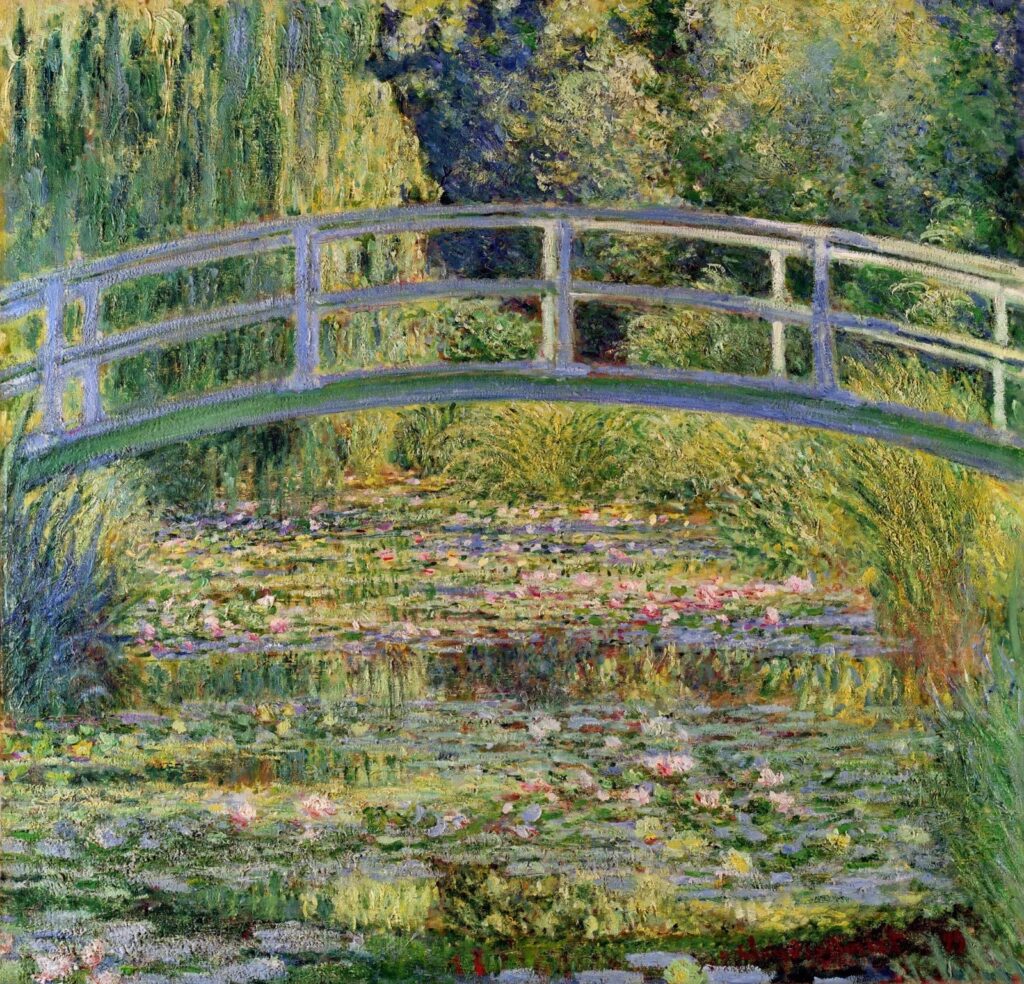
Planting and painting, cultivating and creating: inspired and influenced by their dedication to painting ‘en plein air’ artists of the Impressionist Movement had an especial relationship with gardens and landscape, most famously expressed by Claude Monet (1840-1926) at Giverny.
This talk explores that relationship drawing on the wide range of gardens created and depicted by artists including Gustav Caillebotte, Camille Pissarro, Pierre-Auguste Renoir, Frederick Carl Frieseke, and Pierre Bonnard, placing Giverny and Monet in a wider perspective.
NOTE: 2026 is the centenary of the death of Claude Monet.
Twigs Way
“Imagine If You Will…”: creativity and originality in the age of Artificial Intelligence
MOVED TO 2 JUNE 2026 at 10:30

Synthesising recent research into the nature of human creativity and current concerns about the impact of machine learning on originality, this very topical lecture focuses on how original thought and innovation are affected by the growing application of Artificial Intelligence across all academic disciplines. Justin considers how AI offers great advantages as a tool in scientific and medical research, for social scientists, and also perhaps for many working in the humanities, with exciting applications in painting, sculpture, architecture, video gaming and film. It concludes with a consideration as to whether AI and machine learning are making humans redundant in the creative process.
Justin Reay